
A customer asks "Do you ship to Berlin?" Your website says "We deliver across the EU." The chatbot says "I don't have information about shipping to Berlin." The answer was right there — the chatbot just didn't connect "ship" with "deliver" and "Berlin" with "EU." Query expansion fixes this.
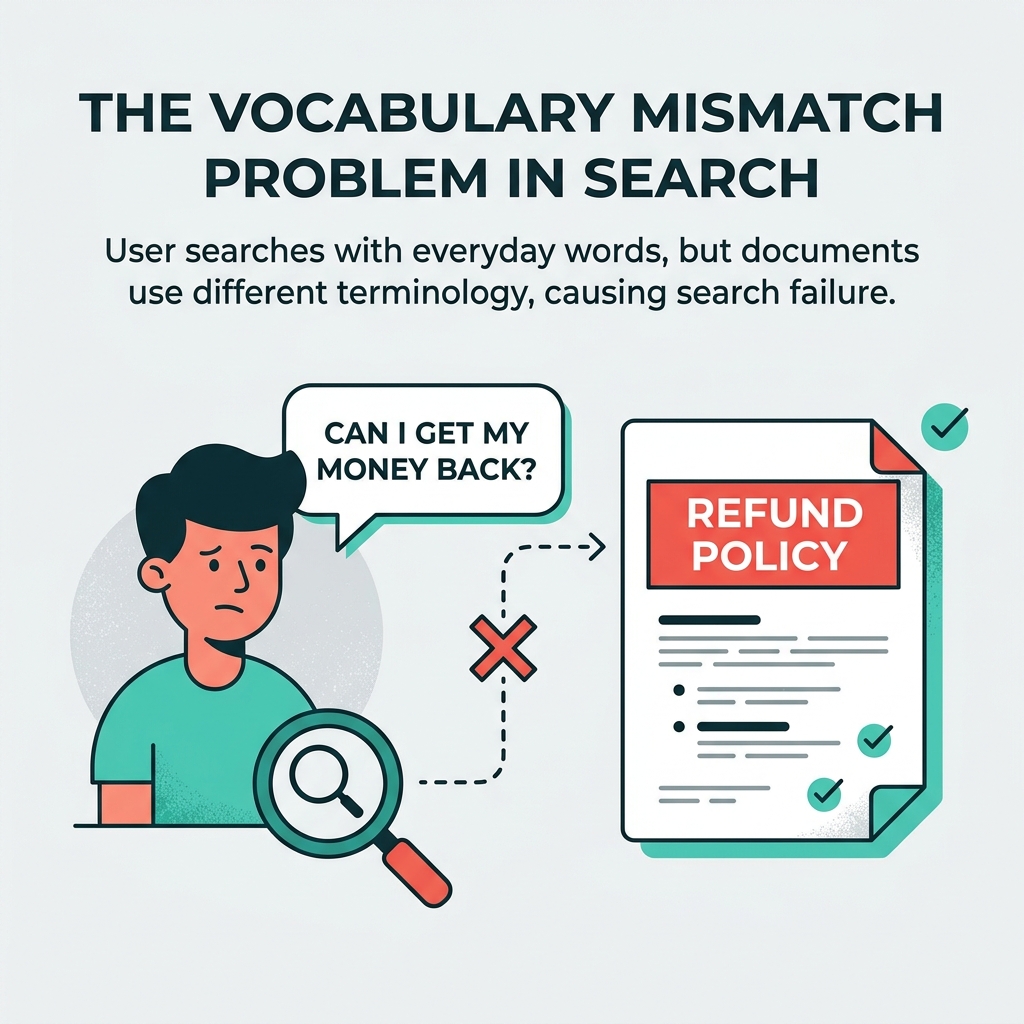
The Word Mismatch Problem
Every AI chatbot searches its training data before answering. But it searches using the customer's exact words. If the customer says "warranty" and your page says "guarantee," the search might miss it entirely.
Customers and content writers use different words for the same thing:
| Customer Says | Your Content Says | Result |
|---|---|---|
| "What's your warranty?" | "Guarantee and replacement policy" | ❌ Miss |
| "How do I cancel?" | "Subscription management and refund process" | ⚠️ Weak |
| "Do you ship to Berlin?" | "EU-wide delivery coverage" | ❌ Miss |
| "Price for teams?" | "Business and enterprise plan pricing" | ⚠️ Weak |
How Query Expansion Works
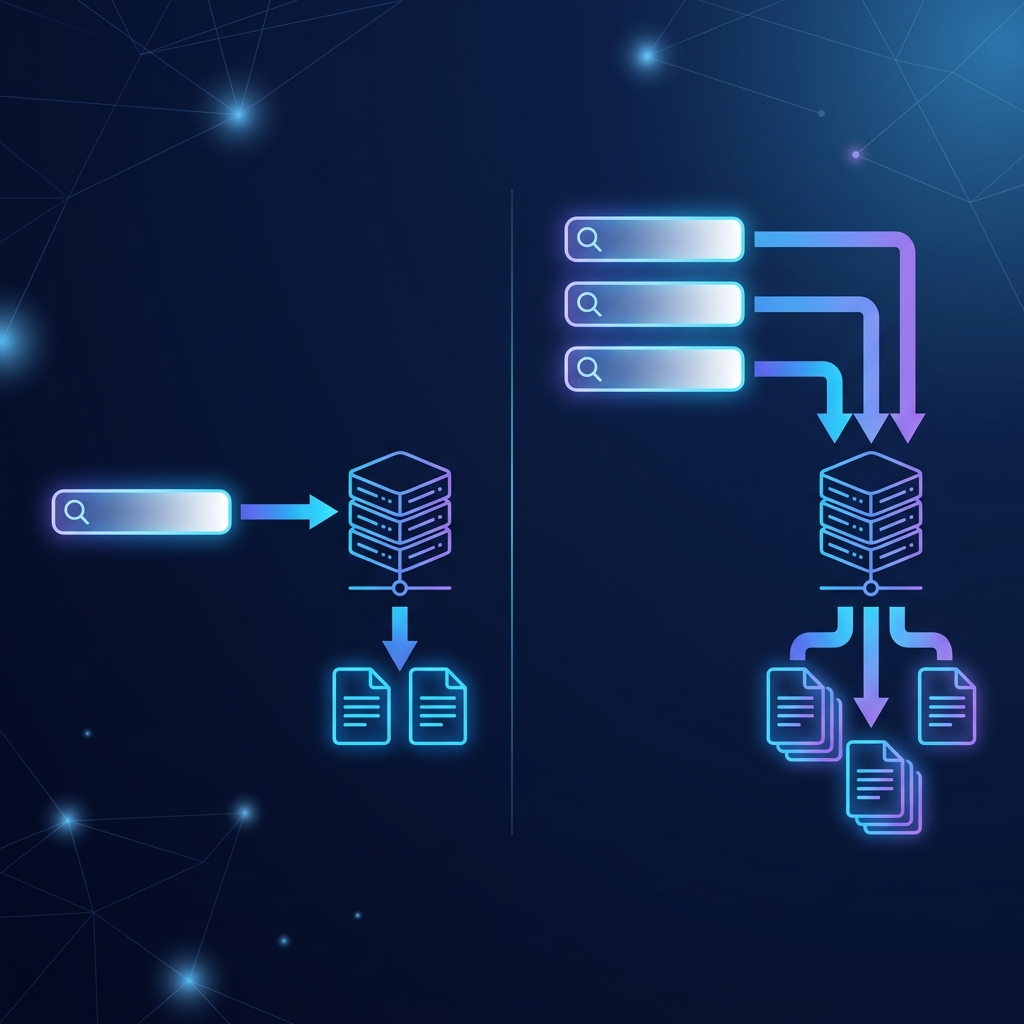
Instead of searching with one query, you search with multiple versions of the same question and combine the results. It's like asking three people to search for something — each phrases it differently, and together they find more.
→ "European shipping destinations available countries"
The Speed Question
"Doesn't running 3 searches slow things down?" Not really. The 3 searches run at the same time (in parallel). You wait for the slowest one, not all three added up.
The expansion call is tiny — about 200 tokens (the main answer uses 2,000+). The total delay is under 200 milliseconds, invisible when the full response takes 2–3 seconds.
When It Helps Most
When to Skip It
The Connection to Data Quality
Query expansion and knowledge lint are two sides of the same coin. Expansion helps you find more content. Lint ensures that content is correct.
Clean your data with knowledge lint, then search it with query expansion. Clean data + better search = consistently accurate answers.
Without lint, better search actually makes contradictions worse — you now find both the right and wrong versions. Without expansion, even perfect data gives incomplete answers when customers use different words.
For businesses building auto-synthesized knowledge layers, expansion becomes even more powerful — the synthesized pages give expanded queries more high-quality content to find.
Check Your AI Visibility
Query expansion improves your chatbot's internal search. But there's a parallel problem externally: AI crawlers visit your site far more often than humans, and your analytics can't see them. Run a free AI Visibility Score check to see how well AI systems can find your content.
Related: Knowledge Lint: Why Your AI Chatbot Is Wrong | Beyond RAG: Auto-Synthesized Knowledge | Dark AI Traffic: The Invisible Problem