Dark AI Traffic: The 47:1 Problem Your Analytics Can't See
February 18, 20269 min read
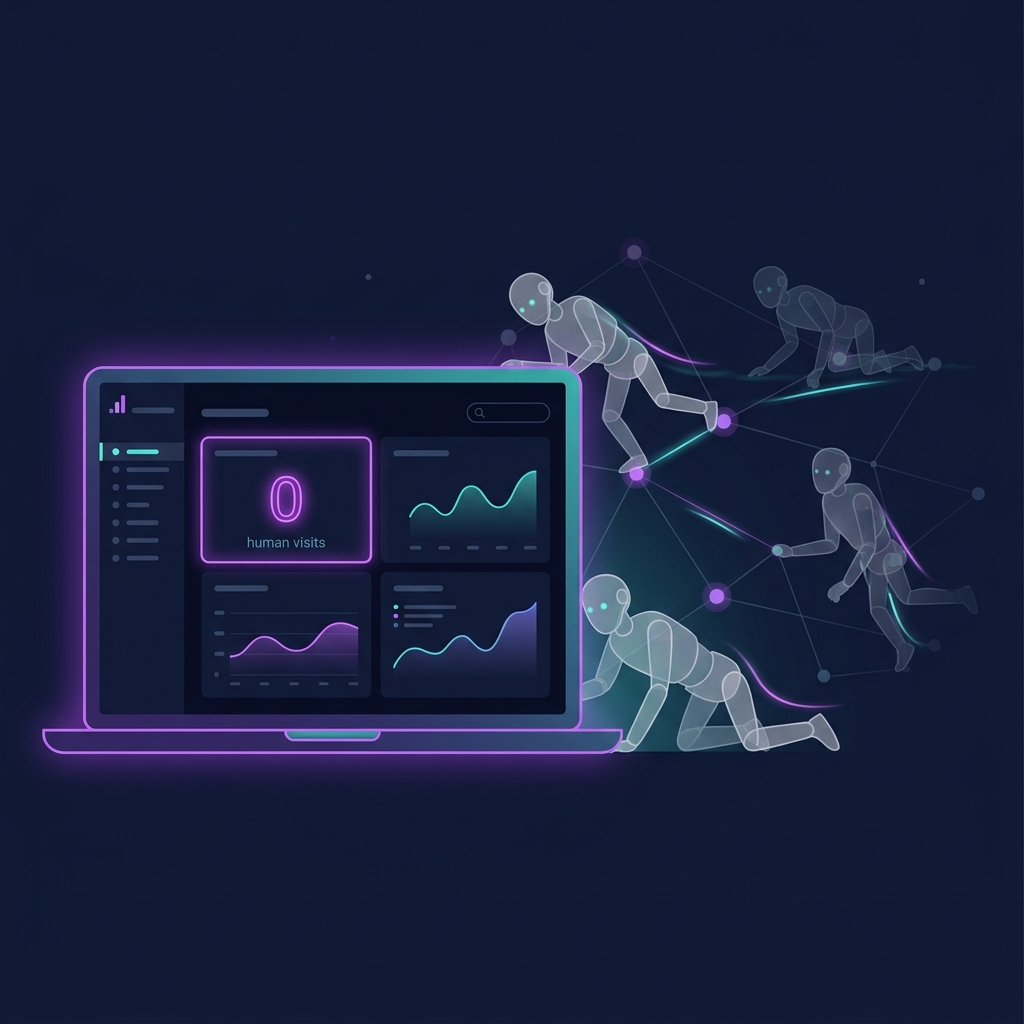
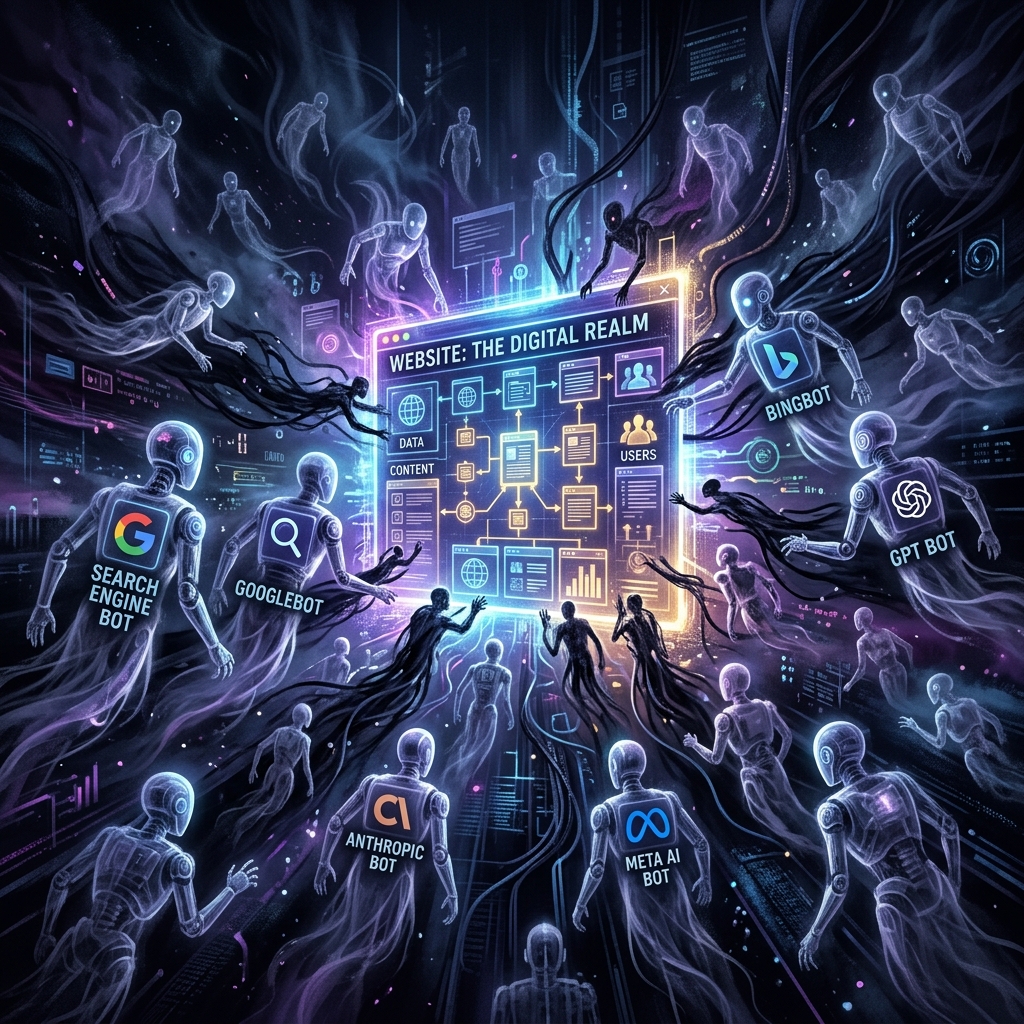
For every human visitor Google Analytics tracks, 47 AI bots are reading your site — invisibly. ChatGPT, Claude, Perplexity, and a growing list of AI crawlers are indexing your content right now. Your analytics show none of it.
47:1
AI bots per human visitor
11
Different AI systems crawling
4.4×
Higher conversion from AI referrals
0%
Visible in Google Analytics
Why Google Analytics Is Blind
Google Analytics works by running JavaScript in the visitor's browser. When a person visits your site, a script fires and records the visit. Simple.
AI bots don't use browsers. They fetch your HTML directly and leave. They never run JavaScript. GA4 has no idea they exist.
Visitor
How They Visit
GA4 Sees It?
Human (browser)
Loads page, runs JavaScript
✅ Yes
Google Search bot
Crawls HTML, may run some JS
❌ No
ChatGPT crawler
Fetches raw HTML
❌ No
Claude crawler
Fetches raw HTML
❌ No
Perplexity bot
Fetches raw HTML
❌ No
Meta AI crawler
Fetches raw HTML
❌ No
The blind spot
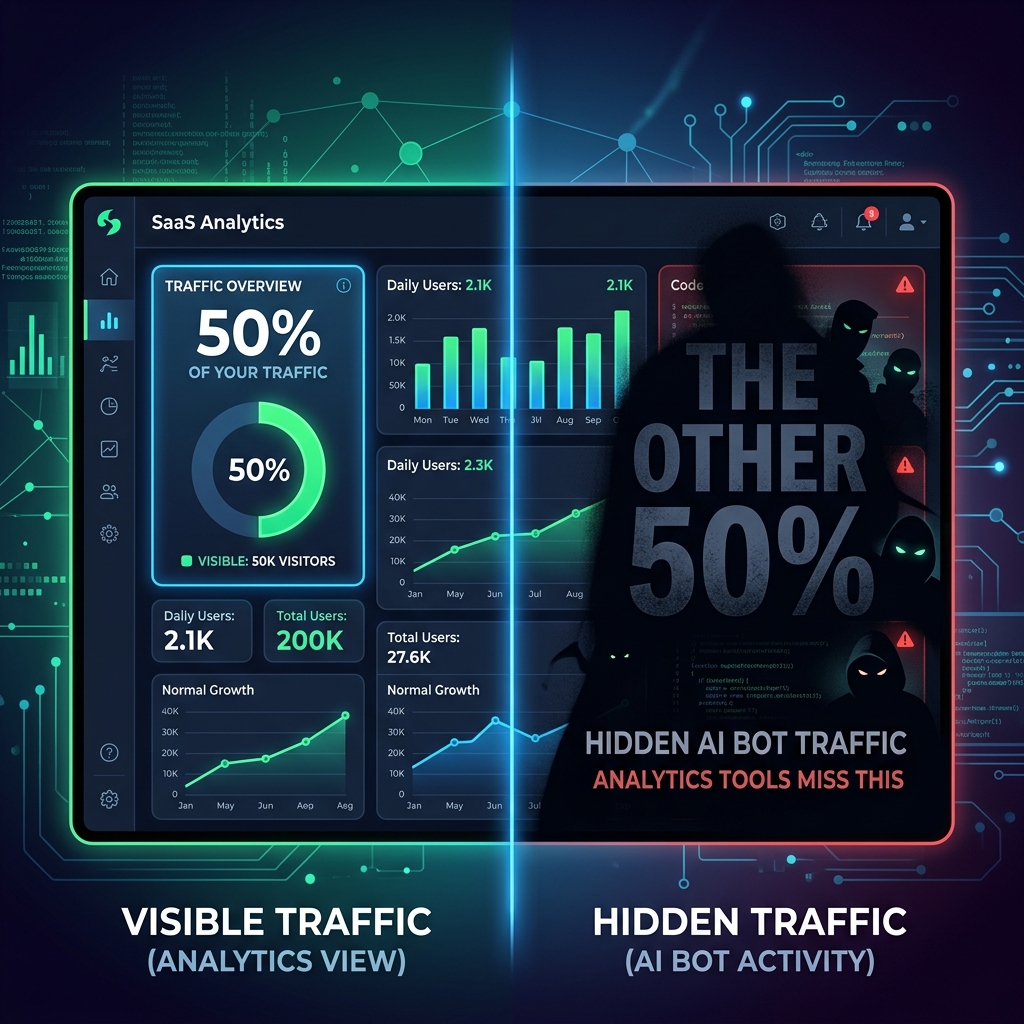
If you make content decisions based on GA4 alone, you're looking at roughly 2% of your total site interactions.
AI crawlers visit your site constantly — but your analytics never show them
The Numbers Are Staggering
A recent study tracked AI bot activity on a mid-sized content site over 3 weeks:
11 AI Systems
Different AI crawlers were identified on a single site during the study period.
10,932 Crawls
Total AI bot visits in just 3 weeks — dwarfing human traffic.
Every 3–4 Hours
Some bots returned multiple times per day, checking for content updates.
47:1 Ratio
For every 1 human search click, 47 AI bots visited the same content.
These aren't one-time visits. AI systems return regularly to check for updates. How often they come back is starting to matter more than the total count.
Traditional analytics only show half the picture
Crawl Frequency = New Authority Signal
In traditional SEO, authority was measured by backlinks and domain age. In the AI era, how often bots come back is becoming a proxy for how much they trust your content.
Crawled every 3 weeks
Your site is a secondary reference. AI systems have your content but don't check for updates often. Your data may be outdated in their index.
Crawled every 3 hours
Your site is a primary source. AI systems actively monitor you for fresh information. Your content is cited with higher confidence.
Frequency is a signal of trust. Regular content updates tell AI systems that your site is a reliable, current source worth checking often.
AI Referral Traffic Converts 4.4× Better
Here's the part that should change your content strategy: visitors who arrive from AI referrals — clicking links in ChatGPT, Perplexity, or Claude — convert at 4.4× the rate of organic search.
~16%
ChatGPT referral conversion
~3.6%
Organic search conversion
Why? Because AI-referred visitors are pre-qualified:
Already researched
The AI answered their question and recommended your site specifically. They're not browsing 10 search results.
Ready to act
Users who ask AI assistants about products are further along the buying journey than users typing broad Google searches.
Trust the source
An AI citation works like a recommendation from a knowledgeable friend. It carries more weight than a search ranking.
What This Means for Your AI Chatbot
If you run an AI chatbot on your site, dark AI traffic affects you in two ways:
Your content has a bigger audience than you think
ChatGPT, Claude, and Perplexity are crawling the same pages your chatbot was trained on. If those pages have contradictions (see knowledge lint), external AI systems will give wrong information about your business too.
Good content works twice
Content optimized for your chatbot's query expansion is also more discoverable by external AI crawlers. And auto-synthesized knowledge pages can be published as public content — giving AI crawlers richer content to index and cite.
5 Things You Can Do Today
1
Run an AI Visibility Score check
Use our free AI Visibility Score tool to see if AI crawlers can find your content and if your robots.txt allows them.
2
Don't block AI bots
Your instinct might be to block crawlers in robots.txt to save bandwidth. But blocking them is essentially de-listing yourself from the future of search.
3
Check your server logs
Look for user-agent strings like "GPTBot," "ClaudeBot," "PerplexityBot," and "Meta-ExternalAgent." You'll be surprised by how many you find.
4
Use server-side rendering
AI bots fetch raw HTML. If your content is rendered by JavaScript on the client side, bots might not see it. Server-side rendering matters more than ever.
5
Monitor Bing Webmaster Tools
The "AI Performance" dashboard shows which pages are being cited in AI answers. It's the closest thing to GA4 for the AI layer.
The Shift: From Clicks to Citations
Your goal is no longer just to rank in Google. It's to be the source that ChatGPT, Perplexity, and Claude cite when someone asks about your industry.
For 25 years, success meant getting humans to click your link in Google. The new game is inference — making sure your content is what the AI uses to generate its answer. The businesses that understand this shift will have a massive advantage as AI becomes the primary way people find products and services.